Cyprus is one of the oldest continuously inhabited places on Earth, a piece of ocean floor pushed two kilometers into the air, and the last divided capital in the world, all on an island you can cross in two hours. Everything below is pinned on the map at the end.
- Drive
- On the left, UK-style. Rent a car; taxis and intercity buses exist, but the island opens up by road.
- When
- April to June and September to November. August is an oven. Flamingos arrive in November; turtles nest June to September.
- The divide
- Split since 1974. Crossing for a day is routine with a passport. Arrive on the island through the south; landing at Ercan airport counts as illegal entry into the Republic. Entries marked north are beyond the line; I have not been myself, so those come from research rather than memory.
Ruins & history
Nine thousand years of it. These are the ones worth the drive.
-
KourionLimassolA Greco-Roman city with a theatre set on a cliff above the sea, mosaic floors still in place, and a villa destroyed by the earthquake of AD 365.
- Rock-cut underground tombs from the Hellenistic period, paired with the Roman villa mosaics of Kato Paphos nearby.
-
KhirokitiaLarnacaA Neolithic settlement of round stone houses dating to around 7,000 BC, with reconstructions you can step inside.
-
Church of Saint LazarusLarnacaA late-9th-century Byzantine church in the heart of Larnaca, built over what tradition holds is the second tomb of Lazarus; a sarcophagus sits in the crypt beneath the altar.
-
Cyprus MuseumNicosiaThe island’s main archaeological museum, spanning nine millennia, including some two thousand terracotta figures found together. Moving to a new building around 2027.
-
Petra tou RomiouPaphos roadA coastal rock formation named in legend as the birthplace of Aphrodite. A roadside stop rather than a destination.
-
Ancient SalamisNorthAn ancient city-kingdom on the east coast, with a Roman gymnasium colonnade beside the sea. Largely unsigned and overgrown.
-
St Hilarion CastleNorthA ruined Crusader castle above Kyrenia with panoramic coastal views. A real climb; pairs with Bellapais Abbey and the 2,300-year-old shipwreck in Kyrenia castle.
- Barn-roofed mountain churches covered inside with Byzantine murals; ten are UNESCO listed. Agios Nikolaos tis Stegis is walkable from old Kakopetria.
The divided island
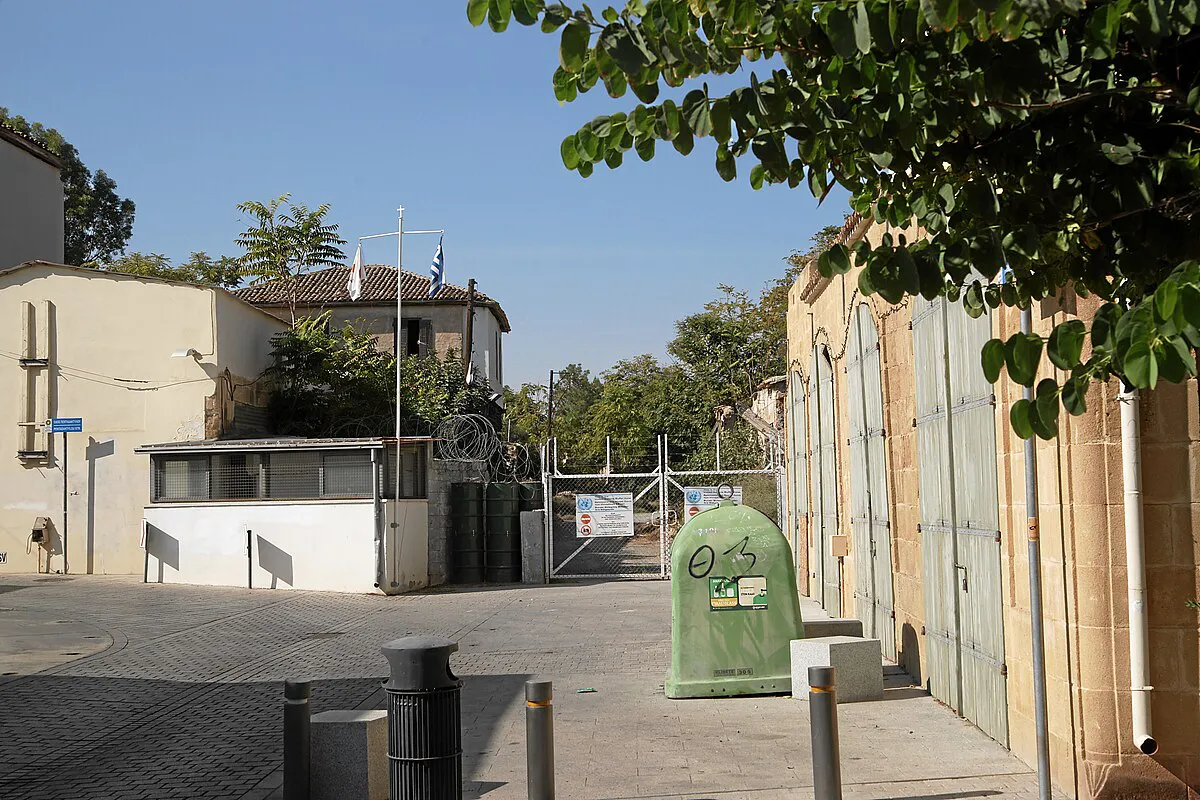
In 1963 a British general drew a line across Nicosia with a green pencil. It is still there. Don’t photograph checkpoints or anyone in uniform.
-
The Green Line walkNicosiaA walk along the barricaded dead-end streets, crossing the divide at Ledra Street (passport, minutes), past the Home for Cooperation, a café inside the buffer zone.
-
Büyük Han & Selimiye MosqueNorth NicosiaA restored Ottoman caravanserai of workshops and cafes, and a Gothic former cathedral converted to a mosque with minarets. Both a short walk from the Ledra crossing.
- Venetian walls that withstood a famous siege, and a French Gothic cathedral — coronation church of the Kings of Jerusalem — a mosque since 1571.
-
VaroshaNorthA resort suburb sealed off since 1974 and partly walkable since 2020; also tens of thousands of people’s confiscated homes. Go quietly, on foot.
Rocks & mines
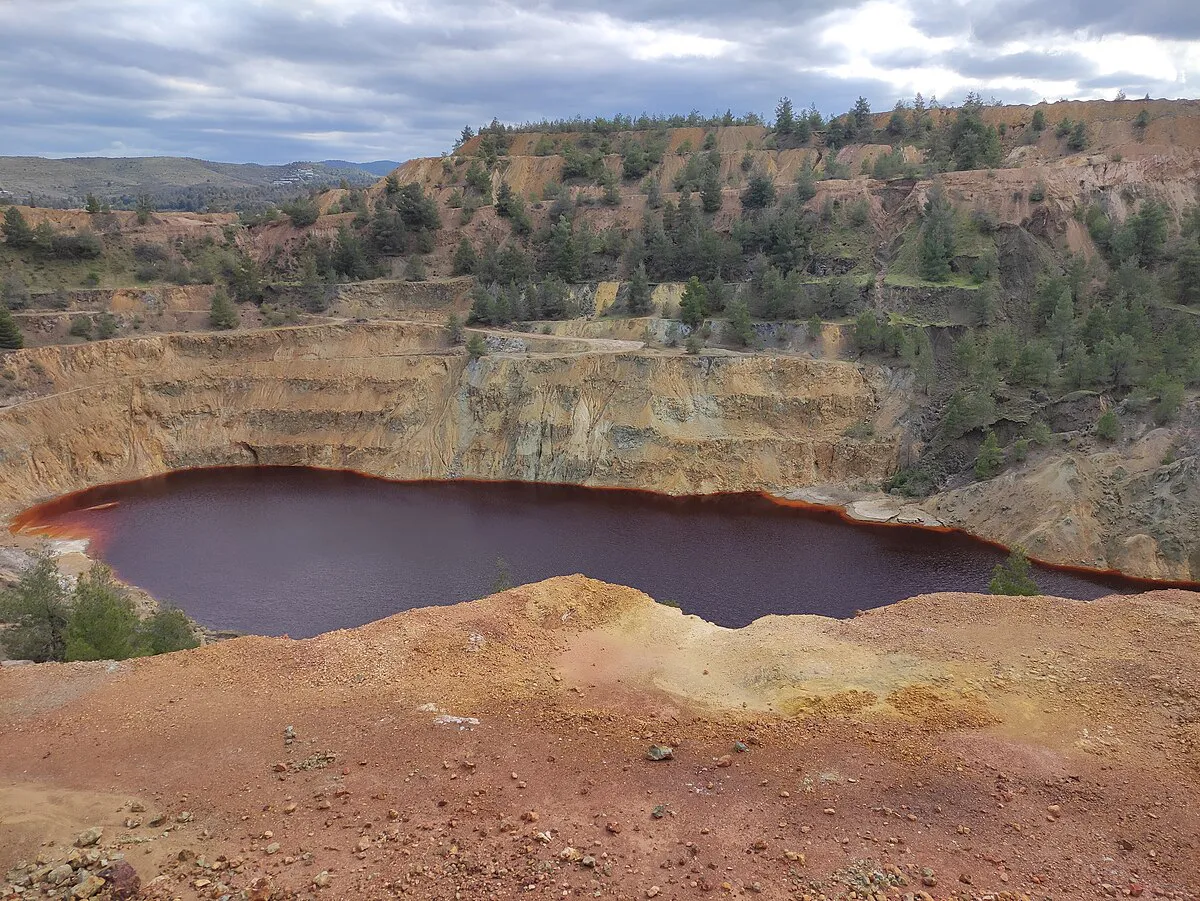
The Troodos is a slab of 92-million-year-old ocean floor, and the word “copper” comes from this island.
- A geology centre in an old school at a rehabilitated asbestos mine, explaining the Troodos range. Worth seeing before the mountain drives.
-
Red Lake, MitseroNicosiaAn abandoned pyrite pit in the island’s copper country, filled with blood-red water, thirty minutes from the capital. Toxic; look, don’t touch.
-
Tzelefos bridgePaphos ForestA 16th-century Venetian stone bridge on the old camel road that carried copper to the sea, deep in the Paphos Forest.
Trails
October through May. Early starts, real shoes, carry water.
-
Adonis & Aphrodite loopAkamasA nine-and-a-half-kilometer Akamas walk to a ridge above the Blue Lagoon coast. Do the Adonis side first for sea views on the descent.
-
Teisia tis MadarisTroodosA three-kilometer trail around the dyke walls of the Madari ridge, with far-reaching views, often above the clouds on autumn mornings.
-
Avakas GorgeAkamasA limestone slot canyon in the Akamas, three meters wide under thirty-meter walls, with a boulder wedged overhead.
The wild
Comebacks and near misses. Seasons matter here.
-
Lara BayAkamasA protected turtle-nesting beach in the Akamas (nesting June and July, hatchlings through September), reached by an unpaved road. No lights after dark in season.
-
The vulture cliffs at EpiskopiLimassolA griffon vulture colony above Zapallo Bay, rebuilt with birds brought from Spain. Best mid-morning when the thermals build.
-
The salt lakesLarnaca · AkrotiriFlamingos in their thousands, November to March; a blinding salt crust in summer. The Akrotiri peninsula is the island’s richest birding year-round.
The sea
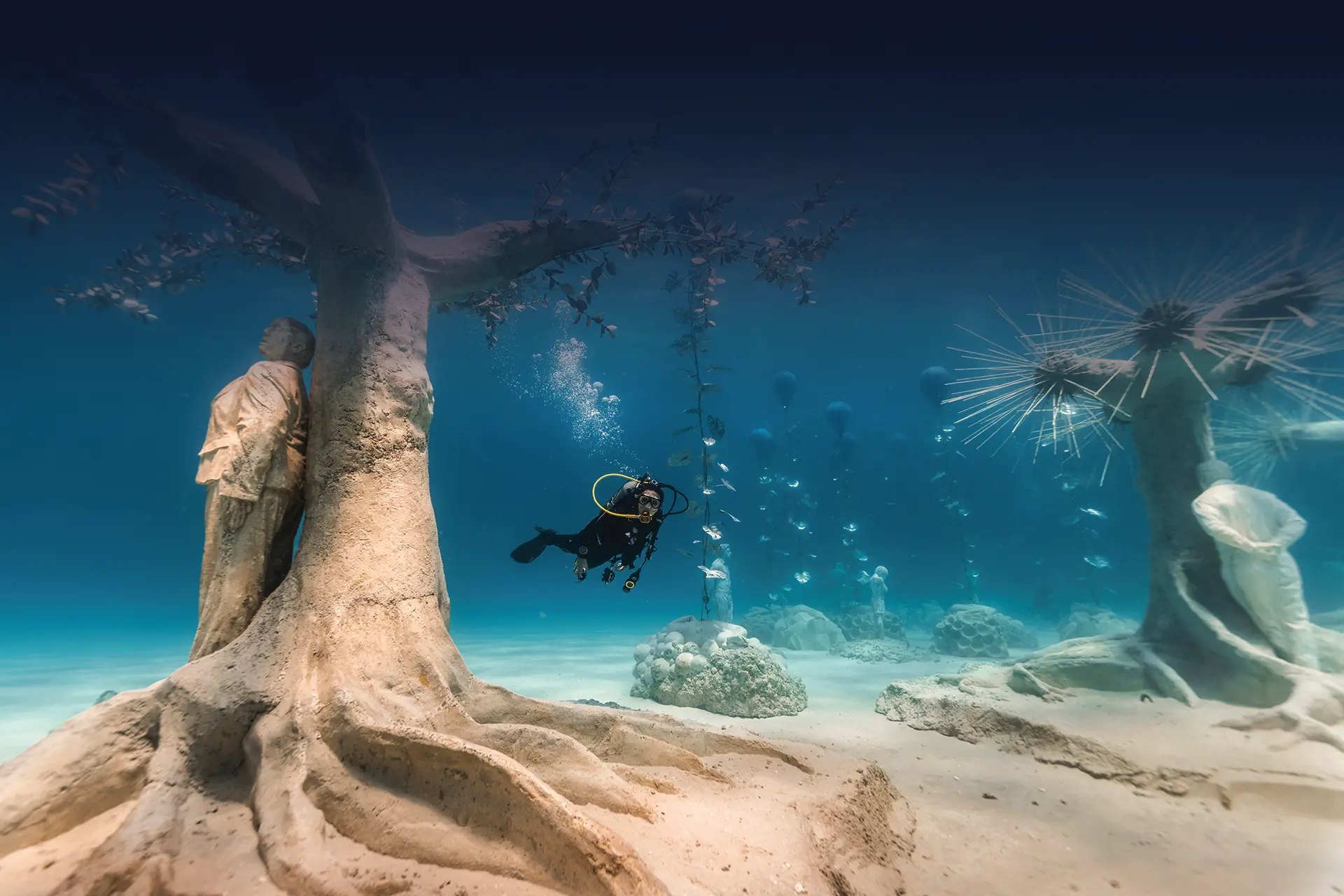
One of the longest dive seasons in the Mediterranean, March to November. The water holds 24 degrees deep into autumn.
-
The ZenobiaLarnacaA 172-meter ferry that sank in 1980 with a hundred trucks aboard; a world top-ten wreck dive, minutes offshore.
-
MUSANAyia NapaAn underwater sculpture museum you snorkel or dive through.
-
Cape Greco by kayakAyia NapaA three-hour paddle along the cliffs to the sea caves, with swimming stops. Runs until the end of October.
-
Nissi · Fig Tree Bay · KonnosAyia Napa · ProtarasThree of the island’s best-known beaches; Konnos is the quietest of the three.
-
Blue LagoonAkamasA bright turquoise bay on the Akamas peninsula, reached by boat or 4x4.
Food
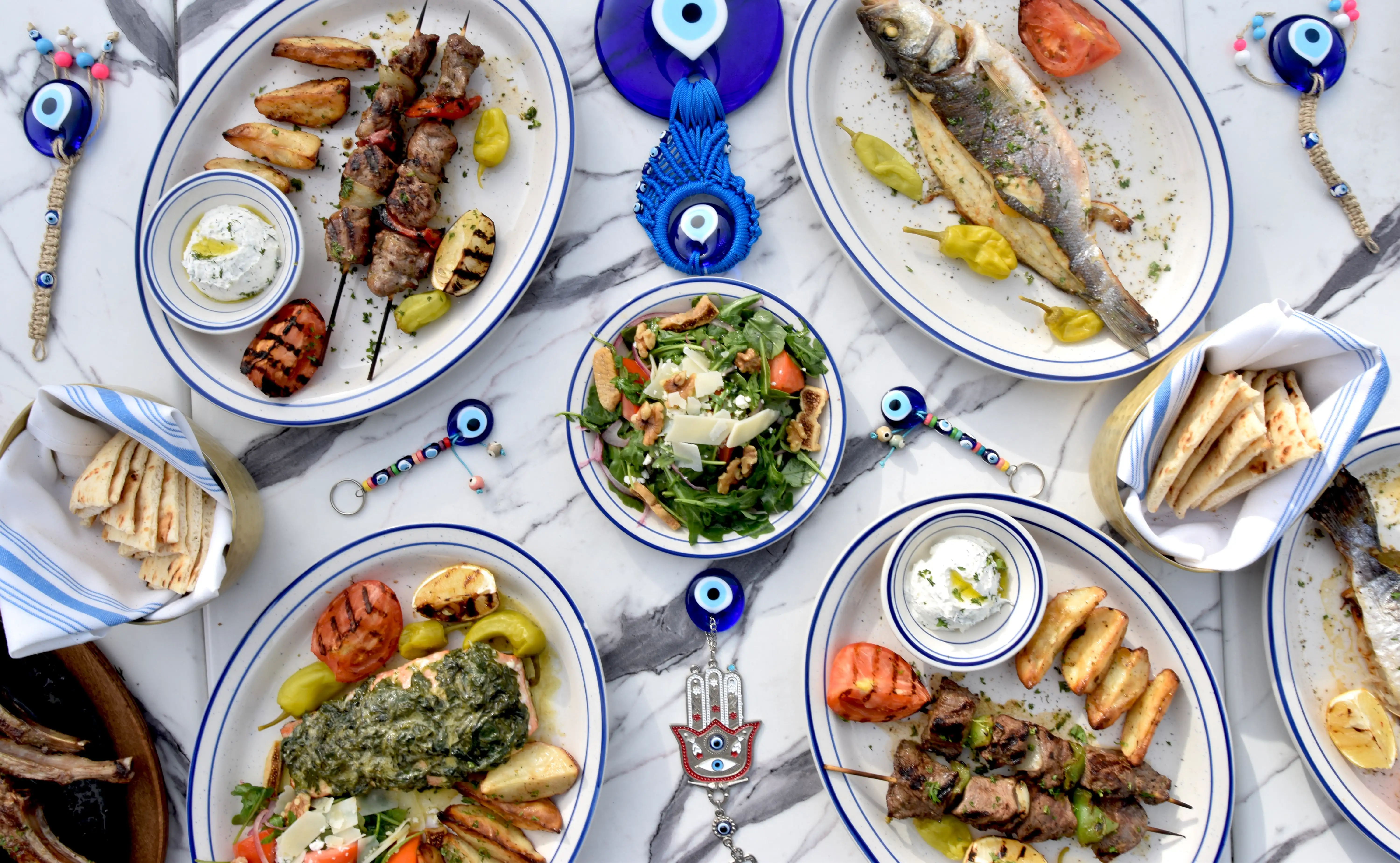
It's a shame to leave without trying a proper meze, local fish, fresh halloumi, kleftiko, and loukoumades.
- A village family home serving lunch at their table, with halloumi made in a vat in front of you and bread from the stone oven. Book ahead.
-
Hercules, ZygiZygiA fish tavern in the fishing village of Zygi, known for its calamari.
-
ΜπéμπαNicosiaModern Cypriot cooking in Nicosia’s old town.
-
TopikaNicosiaA meze restaurant in Nicosia’s old town.
-
PicnicNicosiaA brunch spot in Nicosia’s old town.
-
RokokoNicosiaAn Italian-leaning kitchen and bar in Nicosia’s old town.
-
γρανáζιNicosiaA bar with good food in Nicosia, for the late end of the evening.
-
OXI MarketNicosiaA farmers’ market on the Venetian walls, Wednesday and Saturday mornings.
-
Honest BreadNicosiaA small sourdough bakery, worth a stop for bread and pastries.
-
To souvlaki tou SoukriParalimniA Paralimni grill known for its souvlaki; a second branch in Protaras.
-
Adamos, LefkaraLarnaca hillsA village tavern in Lefkara, the one locals point you to.
-
LazarisLarnacaA bakery-bar in a restored townhouse a few steps from the Church of Saint Lazarus, good from morning coffee to evening drinks.
-
Katoi, OmodosTroodosClay-oven kleftiko in Omodos, the island’s busiest wine village.
Wine
Commandaria is plausibly the oldest wine still made under its own name; the Knights ran it from Kolossi castle. The villages making it are an hour from the coast.
-
ZambartasKrasochoriaA leading winery reviving indigenous grapes: Xynisteri, Maratheftiko, Yiannoudi.
-
Vlassides, KilaniKrasochoriaA winery in the hills between Kilani and Vouni known for its Shiraz. Kilani is the village to eat in, not Omodos.
-
Revecca, Agios MamasCommandariaA tiny organic family producer pouring Commandaria in the old family house.
Slowing down
Cyprus does luxury best when it is woven into a village.
-
Casale PanayiotisTroodosA century of restored stone houses across a living valley village, with a well-regarded spa. Steep lanes.
-
Apokryfo, LofouKrasochoriaA boutique hotel in the unspoilt wine village of Lofou, fifteen minutes from the wineries.
-
AnassaAkamasA luxury beach resort near the Akamas, known for its service. The Latchi fish quay is five minutes away.
-
Hamam OmeryeNicosiaA working bathhouse since 1571, on the site of a 14th-century church. Book a treatment.
The map
Everything above, pinned. Tap a point for the note and directions.
Drag to pan, ctrl + scroll to zoom, tap a point.